
What pitfalls should you watch out for when renting a car long-term?
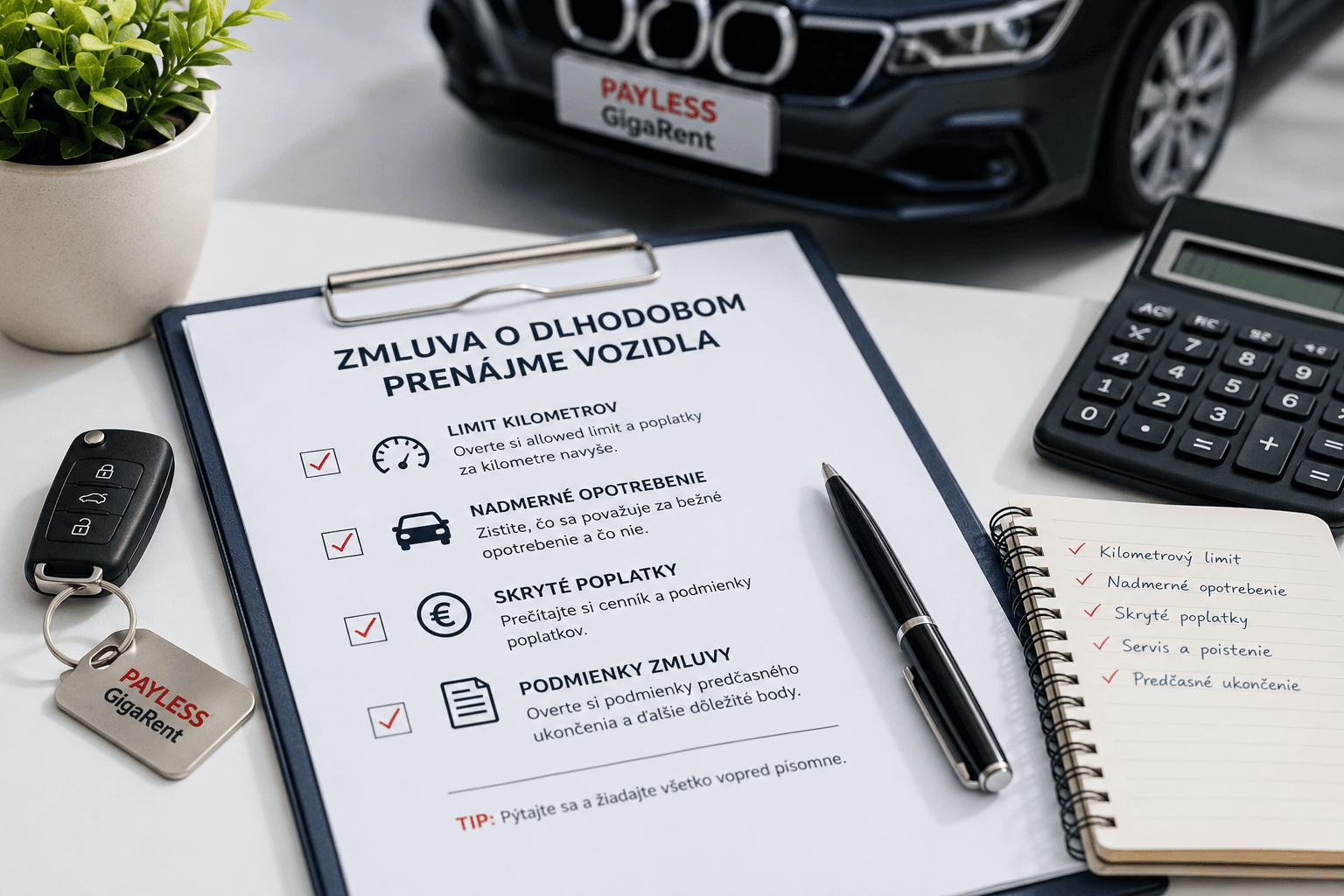
Long-term car rental is an attractive alternative to ownership or leasing, especially if you want predictable monthly costs and minimal hassle. However, when it comes to longer-term rentals, it’s not enough to look only at the price listed in the offer. The terms of the contract are crucial: the mileage limit, rules for exceeding the mileage limit, how wear and tear is assessed, the lessee’s obligations, and individual service and administrative fees.
When signing a long-term car lease agreement, it’s therefore worth paying close attention to the details that can significantly impact the final cost. The difference between a good deal and an expensive lease may not lie in the monthly rate, but in what is charged on top of it.
In this article, we’ll look at the most common pitfalls to check before signing the contract, how to properly assess the mileage limit, what “excessive wear and tear” means, and which fees need to be clarified in advance. The goal is simple: to ensure that, after a few months of leasing, you aren’t surprised by costs you didn’t anticipate when you signed the contract.
What pitfalls should you watch out for with a long-term car lease?
The monthly price isn’t the whole story
When comparing long-term car leases, we naturally focus primarily on the monthly price. However, this may not provide a complete picture of the costs.
Two vehicles with similar monthly rates may have significantly different terms. One may include service, maintenance, tires, and roadside assistance, while with the other, some services may be billed separately.
That’s why it’s not worth comparing just the “starting at X € per month” figure.
What to Check in the Offer
Before signing, be sure to verify the following:
- what exactly is included in the monthly lease payment,
- what the allowed mileage limit is,
- how much each kilometer over the limit costs,
- who covers service and maintenance,
- how tire replacements are handled,
- what the roadside assistance service covers,
- what fees are charged for damage or soiling,
- what the terms are for early termination of the contract.
With a long-term car lease, the total cost for the entire period is what matters most, not just the monthly payment.
Long-Term Car Leases and Mileage Limits: Watch Your Mileage

The mileage limit is one of the most important terms of the contract. For example, if you plan to drive 2,500 kilometers per month, an offer with a 2,000-km limit may seem cheaper at first glance, but in practice it could end up being more expensive.
If you exceed the agreed-upon mileage, the rental company may charge a fee for each additional kilometer.
How to Set the Right Limit
Don’t base your decision solely on how much you drove last month. For a long-term car lease, it’s better to estimate your average mileage for the entire period.
Take into account:
- commuting to work,
- business trips,
- weekend trips,
- vacations,
- visits with family,
- unplanned long trips.
If there’s a big difference between individual months, also check whether the kilometers are calculated on a monthly basis or over the entire contract period. This condition can be crucial.
Don’t forget the charge for extra kilometers
The contract should clearly state the rate for exceeding the mileage limit.
For example, if the fee is €0.20 per kilometer and you drive 1,000 km over the limit, that means an additional cost of €200. If you regularly exceed the limit, this can amount to hundreds of euros per year.
Excessive vehicle wear and tear: what’s still considered normal?

Another common source of unexpected costs is excessive wear and tear on the vehicle.
A car used for several months or years will naturally not be in the same condition as when it was first handed over. Normal signs of use therefore cannot automatically be considered damage.
The problem arises when the damage exceeds what is reasonable given the vehicle’s age, mileage, and usage.
What May Be Inspected
When returning a vehicle, the following may be assessed, for example:
- the condition of the bodywork,
- paint damage,
- wheels and tires,
- the windshield and other windows,
- interior,
- seats and upholstery,
- mechanical parts,
- missing equipment,
- odors or significant soiling.
It is important that the contract or relevant terms and conditions explain the rules according to which excessive wear and tear is assessed.
An unclear definition is a red flag
If the documentation uses only the general term “excessive wear and tear” without further explanation, ask for specific criteria.
When signing, make sure to clarify what is considered normal use and what might result in an additional fee.
Hidden fees may not actually be hidden
A “hidden fee” is often not a fee that has been intentionally concealed. It may be an item listed in the price list or the general terms and conditions that the client simply overlooks when comparing offers.
That’s why it’s worth reading not only the contract itself but also all the documents referenced in the contract before signing.
Which Fees to Check
Pay particular attention to fees for:
- exceeding the mileage limit,
- early termination of the rental,
- late return of the vehicle,
- failure to show up for a service appointment,
- excessive dirt or grime,
- damage to the vehicle,
- loss of documents or accessories,
- administrative procedures,
- processing of fines,
- breach of contract terms,
- use of the vehicle in violation of the contract.
For example, Payless Car Lease’s current public price list lists separate administrative, handling, service, and other fees. The very existence of a separate price list shows why it pays to look beyond the monthly price when leasing a car.
Long-Term Car Leases and Early Termination of the Contract
When signing a contract, we often think about how long we want to use the vehicle. However, we less often consider the question: What if my situation changes?
For a business, this could mean a decline in orders, a change in job position, or the need for a different type of vehicle. For a private customer, it could involve moving, buying a car of their own, or another life change.
Check the terms and conditions before signing
Find out:
- whether it’s possible to terminate the contract early,
- what the notice period is,
- whether there is a fee for early termination,
- how any compensation is calculated,
- whether it’s possible to exchange the vehicle for a different model.
Long-term car leasing is meant to be a flexible solution, but that flexibility always comes with specific contractual terms.
Who pays for service, tires, and routine maintenance?
One of the main advantages of long-term car leasing is the ability to transfer some of the responsibilities associated with vehicle ownership to the lessor.
However, not every contract includes the same scope of services. Therefore, it’s important to verify exactly what the phrases “service included” or “full service” mean.
Check the Scope of Services
Before signing, ask yourself these questions:
- Are regular maintenance inspections included?
- Who pays for routine maintenance?
- Are tires included in the price?
- Does the price include tire rotation and storage?
- What happens in the event of a breakdown?
- Is roadside assistance included?
- How is a replacement vehicle handled?
For long-term rentals, Payless GigaRent highlights the inclusion of services such as insurance, servicing and maintenance, and tire changes as one of its benefits. However, the specific scope must always be assessed based on the current offer and the terms of the contract.
The handover report can determine the costs upon return
One of the most practical steps in a long-term car rental is a thorough inspection of the vehicle upon pickup.
If the car already has a minor scratch, a damaged wheel, or any other defect at the start of the lease, it should be properly documented in the handover report.
Keep your own records
When picking up the vehicle, we recommend:
- inspect the entire vehicle from the outside,
- check the rims and tires,
- inspect the windshield and lights,
- inspect the interior and trunk,
- verify the fuel level or battery charge as applicable,
- check the vehicle’s equipment,
- take photos of any damage,
- verify that the damage is listed in the report.
It’s a good idea to repeat this same procedure when returning the vehicle.
Such documentation can significantly facilitate the resolution of any dispute regarding when the damage occurred.
Checklist Before Signing a Long-Term Car Lease Agreement
Before signing, go through this simple checklist. If you don’t know the answer to any question, it’s best to clarify it before taking delivery of the vehicle.
10 Questions Worth Asking
- What is the total mileage limit?
- How are kilometers over the limit billed?
- Is mileage assessed monthly or for the entire term?
- What is considered excessive wear and tear?
- Is there a price list for damages and fees?
- What is included in the monthly price?
- Who pays for maintenance and tires?
- What are the terms for early termination?
- What happens if the vehicle is returned late?
- What is the procedure in case of damage or an accident?
If the provider cannot clearly explain the answer to any of these questions, do not sign the contract based solely on an attractive monthly price.
How do you compare two long-term lease offers?
The best way is to create a simple model of the total costs.
Total cost = monthly lease payment × number of months + expected additional costs.
The second part includes, for example, mileage over the limit, services not included in the package, early termination fees, or costs related to damage.
Compare like-for-like terms
If one offer includes 2,000 km per month and another 3,000 km, it doesn’t make sense to compare them based solely on the monthly price.
You should also compare the scope of services, insurance, maintenance, tires, roadside assistance, and vehicle return conditions.
For B2B customers, this approach to comparison is even more important. With multiple vehicles in a company fleet, even a small difference in terms and conditions can add up to a significant amount over the entire lease period.
Conclusion: The Cheapest Car May Not Be the Best Choice
Long-term car leasing can be a simple way to get a vehicle without the hassles of ownership. However, the decision shouldn’t be based solely on the monthly price.
The most important thing is to understand the entire leasing mechanism: the mileage limit, the fee for exceeding the mileage limit, the scope of included services, the rules regarding damage and excessive wear and tear, and the terms for terminating the contract.
When choosing a vehicle through Payless GigaRent, we therefore recommend looking at the offer as a whole. Transparent terms and clearly defined services will allow you to better estimate the actual costs and avoid unpleasant surprises during the lease.
FAQ: Long-Term Car Rental
What should you check when renting a car long-term?
Before signing, be sure to verify the mileage limit, the rate for excess mileage, the scope of services included in the monthly price, the terms regarding excessive wear and tear, fees, and options for early termination of the contract.
What happens if I exceed the mileage limit?
Depending on the specific contract, an additional fee may be charged for each kilometer over the agreed-upon limit. Therefore, always check the rate for excess kilometers.
What does “excessive wear and tear” on a vehicle mean?
This refers to damage or wear and tear that exceeds what is reasonable for normal vehicle use. Specific criteria should be outlined in the contract or the relevant rental terms and conditions.
Are maintenance and tires included in the price for a long-term car rental?
It depends on the specific program and contract. Before signing, be sure to verify which maintenance and operational services are included in the monthly rental fee.
How can you avoid unexpected fees?
Read the contract, price list, and general terms and conditions. Pay special attention to the mileage limit, damage, excessive dirt, maintenance, late returns, and early termination.