
Long-Term Lease vs. Operating Lease: What Are the Main Differences in Contract Term, Down Payment, Maintenance, and Termination?
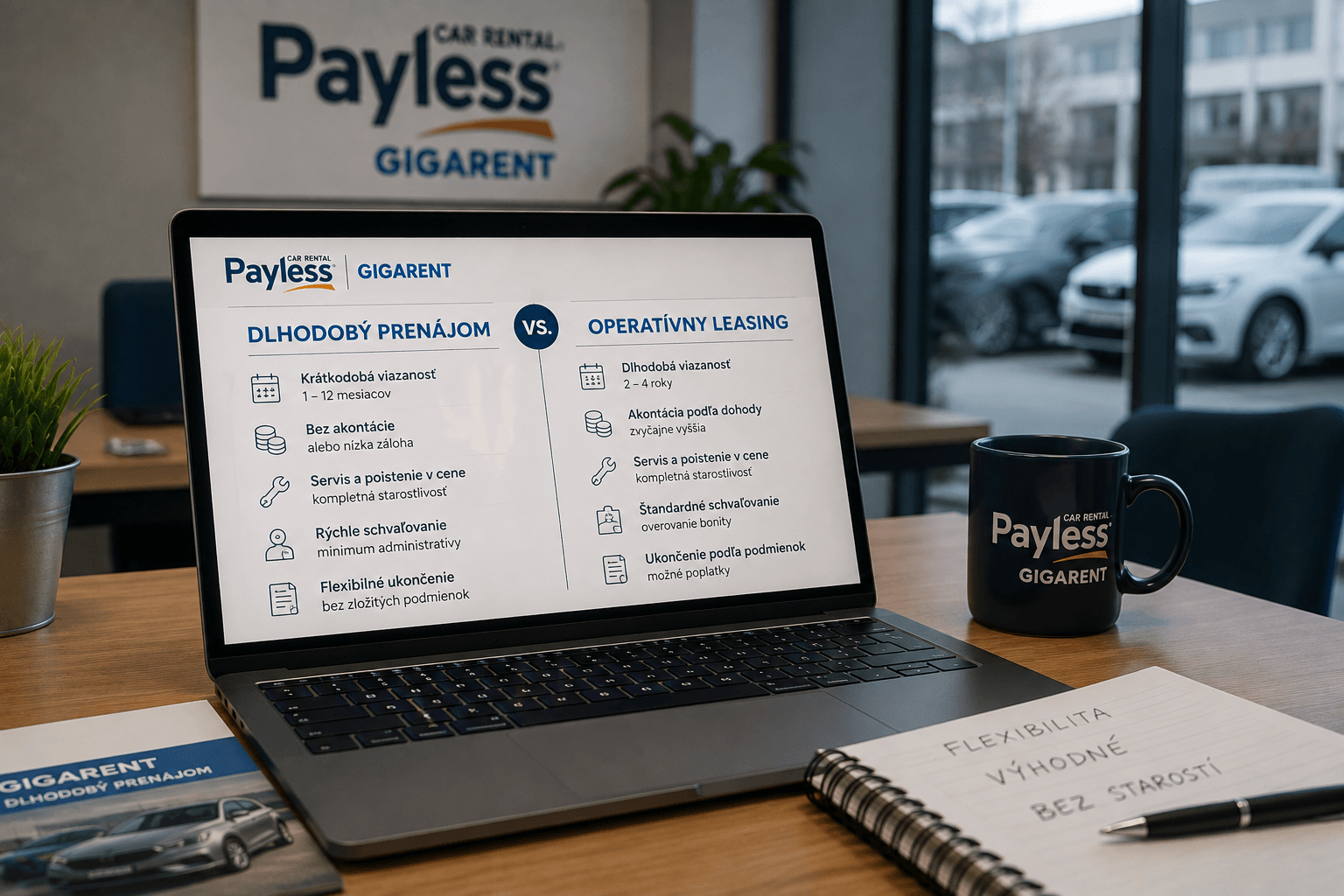
Choosing between a long-term lease and an operating lease is one of the most common decisions made by companies, self-employed individuals, and private individuals who need a vehicle without purchasing it. Although both solutions may seem similar at first glance, they differ significantly in practice. The differences lie primarily in the contract term, the need for a down payment, the approval process, the scope of services, and the options for terminating the contract.
It is precisely these factors that determine which solution will be more advantageous for a specific situation. If you need a vehicle for only a few months or want maximum flexibility, long-term rental may be the ideal choice. However, if you plan to use the vehicle for several years and prefer stable monthly costs, operating lease may be a more effective solution.
In this article, we’ll compare both financing models in detail and show who they’re best suited for. We’ll also explore why more and more companies are turning to PAYLESS Gigarent, which offers flexible long-term rentals without unnecessary complications.
Long-Term Rental vs. Operating Lease – Key Differences
Both products allow you to use a new vehicle without having to purchase it. The difference, however, lies in the level of flexibility and commitment required from the customer.
Long-Term Rental
This is primarily intended for clients who need a vehicle for several months and do not want to commit to a long-term contract.
The biggest advantages are:
- shorter commitment period,
- simple approval process,
- quick vehicle pickup,
- minimal paperwork,
- flexible lease termination.
Operational Leasing
This option is suitable for companies or entrepreneurs who plan to use the vehicle for the long term, typically 24 to 48 months.
It offers:
- lower monthly payments with a longer commitment period,
- stable costs,
- regular fleet renewal,
- predictable business expenses.
Differences in Contract Terms
The first—and often most important—question is the length of the contract.
With a long-term lease, the client uses the vehicle only during the period when they actually need it. This could be for several months, seasonal projects, or to bridge the gap until a new car is delivered.
Operating leases are based on multi-year contracts. The client commits to using the vehicle for the entire agreed-upon term.
When is flexibility crucial?
Long-term rental is ideal if:
- the company is growing,
- it is hiring new employees,
- is handling seasonal orders,
- it is waiting for ordered vehicles to be delivered,
- it needs to temporarily expand its fleet.
It is precisely in these situations that PAYLESS Gigarent offers significantly greater flexibility than traditional leasing.
Down Payment – Do You Need to Pay a Large Upfront Deposit?
One of the common reasons why companies prefer long-term rental is the absence of a large upfront investment.
With operating leases, terms may vary depending on the leasing company and the client’s creditworthiness.
With long-term rental, a large down payment is not required in most cases, which helps preserve the company’s cash flow.
This means:
- better cash flow,
- no capital tied up,
- simpler financial planning.
Service and Operating Costs
For both products, service is typically included in the monthly payment. However, the scope of services may vary by provider.

What is typically included in a long-term lease?
PAYLESS Gigarent services typically include:
- regular maintenance,
- statutory and collision insurance,
- seasonal tire changes,
- roadside assistance,
- a highway toll sticker,
- administrative support for vehicle operation.
This way, the client knows exactly what their monthly costs will be.
How does the approval process work?
The approval process is one of the biggest differences.
With operating leases, the following are typically required:
- a credit check,
- financial statements,
- approval by the leasing company,
- signing of several documents.
With long-term rentals, the paperwork is generally simpler and the entire process is usually much faster.
This is especially appreciated by companies that need a vehicle practically right away.
Termination of the contract—which option offers greater flexibility?
The method of terminating the contract also significantly influences the choice of product.
With operating leases, early termination is usually subject to fees or other conditions.
Long-term rental offers substantially greater flexibility, as it is designed specifically for situations where the client’s needs may change.
This is advantageous, for example, in the following situations:
- the completion of a project,
- changes in the number of employees,
- company reorganization,
- seasonal fluctuations.
Comparison of the Two Solutions
| Area | Long-term lease | Operating lease |
|---|---|---|
| Commitment | Several months | Typically 2–4 years |
| Flexibility | Very high | Lower |
| Down payment | Usually no large initial investment | Depends on the provider’s terms |
| Approval | Faster and easier | More thorough verification |
| Service | Included in the monthly payment | Usually included in the lease |
| Contract termination | More flexible | Often with restrictions |
When to Choose a Long-Term Lease?
A long-term lease is the ideal solution in situations where flexibility is a priority.
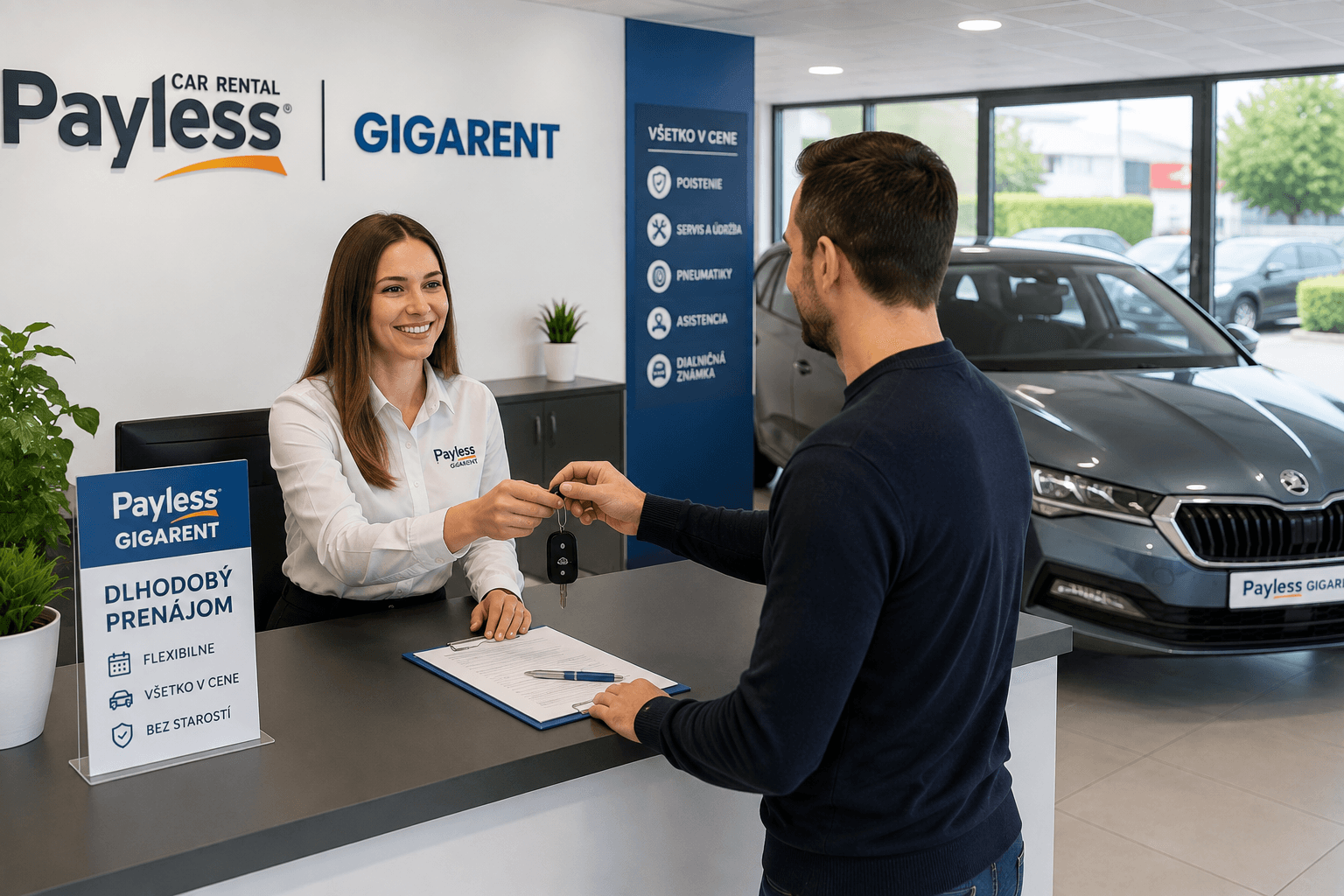
It’s especially suitable when:
- you need a vehicle for 2 to 12 months,
- you’re waiting for new company cars,
- you hire employees on a fixed-term basis,
- you’re working on a short-term project,
- you don’t want to deal with maintenance or paperwork,
- you need a vehicle without a lengthy approval process.
That’s exactly why PAYLESS Gigarent is the ideal solution for rapidly growing companies that don’t want to be tied down by multi-year contracts.
Conclusion
The difference between long-term rental and operating lease lies not only in the length of the contract. Flexibility, the approval process, the need for a down payment, termination options, and the scope of included services are also important factors.
If you need a vehicle for a shorter period and want the flexibility to adapt to changing business conditions, a long-term rental is a more effective solution. If you plan to use the vehicle consistently over several years, an operating lease may result in lower long-term costs.
PAYLESS Gigarent services offer flexible mobility without unnecessary commitments and allow both companies and sole proprietors to focus on their business instead of managing vehicle operations.
Frequently Asked Questions (FAQ)
What is the main difference between long-term rental and operating lease?
The biggest difference lies in the contract term and flexibility. Long-term rental is suitable for shorter periods, while operating lease is intended for use over several years.
Is a down payment required for a long-term lease?
In most cases, no large upfront investment is required, which helps preserve the company’s cash flow.
What does the monthly payment for a long-term lease include?
It typically includes maintenance, insurance, roadside assistance, tire changes, and other operational services, depending on the provider’s terms.
Which solution is better suited for new businesses?
If a company needs flexibility or is unable to estimate its future needs, a long-term lease is usually the more practical choice.
Is it easier to terminate a long-term lease agreement?
Generally, yes. A long-term lease offers greater flexibility than a multi-year operating lease.